

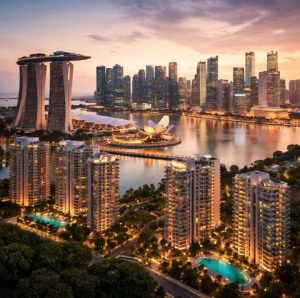
 Luxury condominiums in Singapore have shown an unusual ability to hold their value during economic slowdowns. While mass-market property tends to feel the pressure of tighter credit and cautious buyers, the high-end segment often tells a different story, partly because buyers are drawn to the assurance of a premium living environment alongside long-term asset stability. This resilience is not accidental. It is the result of structural factors that shape who buys luxury homes, why they buy them, and how the market is regulated.
A different buyer profile
Luxury condo buyers in Singapore are not typically stretched by mortgages or short-term financial stress. Many are ultra-high-net-worth individuals, family offices, or long-term investors. Some are locals with deep capital reserves. Others are foreign buyers seeking stability rather than quick gains.
Because these buyers rely less on leverage, rising interest rates or stricter lending rules do not force them to sell. During downturns, they are more likely to wait or even buy selectively rather than rush to exit the market. This keeps distress sales low and prices relatively stable.
Singapore’s role as a safe haven
In times of global uncertainty, capital looks for safety. Singapore has earned a reputation as one of the most stable places to park wealth. Strong governance, clear property laws, and a trusted legal system matter more during downturns than during boom years.
Luxury real estate benefits directly from this perception. High-end condos are often treated as wealth-preservation assets, similar to prime real estate in London or New York. Even when global markets slow, Singapore continues to attract buyers who value long-term security over short-term returns.
Limited supply of true luxury homes
Luxury condos are not just expensive apartments. They are typically located in tightly held areas such as Orchard Road, Marina Bay, and Sentosa Cove. Land in these locations is scarce, and new supply is carefully controlled.
Even during strong economic cycles, the government does not release large amounts of prime land. This discipline limits oversupply, which is one of the main reasons property markets collapse elsewhere during downturns. When supply is capped and owners are financially strong, prices tend to hold.
Long-term ownership mindset
Luxury condo owners in Singapore usually buy with a long-term horizon. Many view these homes as legacy assets to be passed down, not flipped within a few years. This mindset becomes especially important during economic slowdowns.
Instead of panicking when sentiment weakens, owners often choose to hold. Rental income from expatriates or corporate leases can offset holding costs. As a result, selling pressure remains muted, and price corrections are shallower than in the broader market.
Strong rental demand at the top end
Even during slower economic periods, Singapore remains a regional business hub. Senior executives, diplomats, and high-level professionals still need housing. Many of them prefer luxury condos with privacy, security, and full facilities.
This steady rental demand provides a safety net for owners. While rents may soften slightly during downturns, they rarely collapse in the prime segment. Investors know this, which reinforces confidence and reduces the urge to sell at a discount.
Government policies that reduce volatility
Singapore’s property cooling measures are often seen as restrictive during boom times. Yet they play a stabilizing role during downturns. Measures such as Additional Buyer’s Stamp Duty and strict loan-to-value limits discourage speculative buying.
The result is a market that overheats less and crashes less. Luxury buyers, who already comfortably meet these requirements, are less affected by policy changes. This creates a more stable ownership base that can ride out economic cycles.
Currency strength and global perspective
The Singapore dollar has historically been one of Asia’s stronger currencies. For foreign buyers, this adds another layer of appeal. Even if property prices remain flat during a slowdown, currency stability helps protect overall value.
From a global portfolio perspective, luxury condos in Singapore offer diversification. Investors compare them not just to local assets, but to prime properties worldwide. During uncertain periods, that comparison often works in Singapore’s favor.
Quality and design that age well
Luxury developments in Singapore are known for high construction standards, thoughtful layouts, and strong maintenance. This matters more during slowdowns than during booms. Buyers become selective. Poorly designed or aging properties struggle, while well-built luxury condos retain appeal.
Developers in this segment also tend to invest in architecture and amenities that stand the test of time. That reduces obsolescence risk and supports long-term value.
A market that corrects, not collapses
Luxury condo prices in Singapore are not immune to economic cycles. They can stagnate or dip slightly during prolonged slowdowns. But history shows that corrections are usually measured, not severe.
The combination of wealthy buyers, limited supply, strong governance, and a global safe-haven status creates a buffer. Instead of sharp declines, the market adjusts through slower transaction volumes and longer holding periods.
Looking ahead
Economic slowdowns will continue to happen. That is unavoidable. What sets Singapore’s luxury condo market apart is how it responds. Rather than reacting emotionally, it moves cautiously and deliberately.
For investors and homeowners who value stability over speculation, this resilience is the core appeal. Luxury condos in Singapore are not about chasing rapid growth. They are about protecting wealth, maintaining quality, and staying anchored in one of the world’s most dependable property markets.